
Quick answer
The skjervoy whale watching season runs from early November to late January, when herring shoals draw orca and humpback whales into the waters around Skjervøy. Tours depart in daylight, so aim for the 09:00–13:00 arrival window at Havnegata 18. Harbour access itself is free at 0 NOK, though individual tour prices vary.
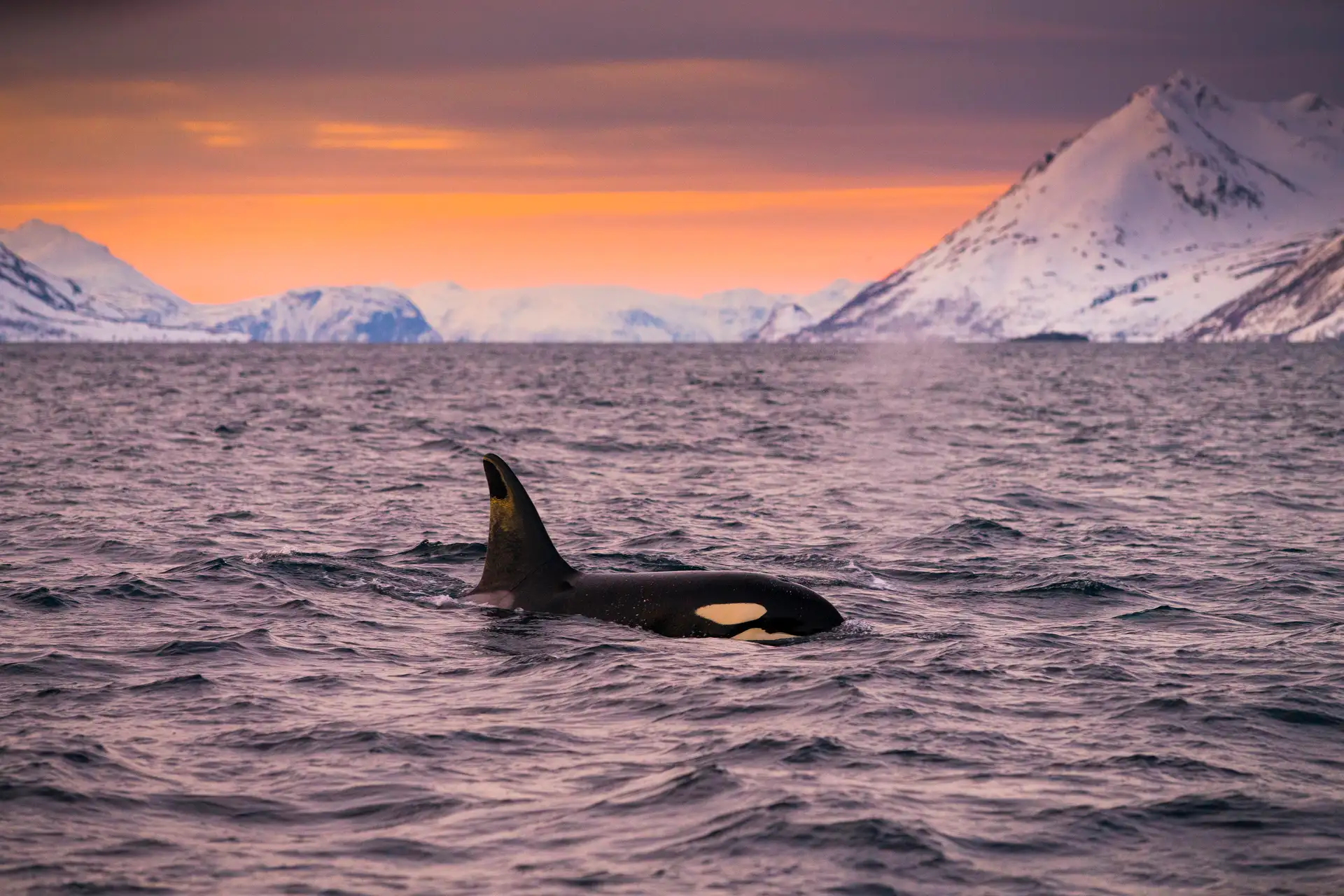
Each winter, one of Europe's largest herring stocks funnels through the sounds off Skjervøy, and the predators follow. The skjervoy whale watching season is timed entirely to this movement of fish rather than to any calendar convenience. When the shoals arrive, orca and humpback whales trail them into the narrow waters of the Kvænangen and Lyngenfjord region, sometimes within sight of the harbour at Havnegata 18. It is a natural event, not a staged attraction, and that distinction shapes everything about how a visit is planned. The window is narrower than many visitors expect. Boats operate through the darkest months, when the sun barely clears the horizon, and departures are built around the few usable hours of Arctic light. Many first-timers assume a summer trip is possible; in these waters the spectacle belongs to the cold months alone. This is why a whale safari Skjervøy tour reads more like a fishing expedition than a fixed schedule: skippers track the herring by sonar, gull activity, and radio reports from the fleet, then move to where the animals are feeding. No two mornings look alike. Migration tracking has become part of the appeal. Local operators log sightings across the season, and the pattern of where whales appear shifts year to year as the herring change their wintering grounds. A decade ago the action centred further west; more recently the fjords around Skjervøy have held the densest gatherings. Some skippers now share rough sighting maps online, and reading them the week before a trip gives a realistic sense of odds rather than a guarantee. Reading these records helps set expectations before booking any Skjervøy whale watching tours. Access to the working harbour itself costs nothing, listed at 0 NOK, though every boat trip is priced separately by its operator. The site stays open around the clock, so early arrivals can watch the fleet prepare before first light. For anyone planning an Arctic whale watching trip, the practical takeaway is simple: the animals set the timetable, the daylight sets the hours, and flexibility matters more than any single date. Understanding how the skjervoy whale watching season actually works turns a gamble into a reasonable bet.
“In these waters the whales set the timetable and the daylight sets the hours.”
Best Months and Daylight for the Skjervoy Whale Watching Season
The optimal window for whale watching in Skjervøy is from November to January, when migrating herring draw pods of humpbacks and orcas close to the coast. This brief winter window offers the highest concentration of marine mammals, aligned with the region's unique twilight conditions.
November
High demand, moderate harbor trafficIcy winds, 0°C to -5°C
The herring arrive in large numbers, attracting feeding orcas and humpback whales. Daylight is limited but sufficient for spotting, with several hours of twilight before the polar night begins.
December
Peak holiday booking volumesCold and dark, -2°C to -7°C
This month coincides with the polar night, meaning the sun never rises above the horizon. Midday twilight provides three hours of soft blue light that helps silhouetting the whales against the water.
January
Steady, quieter post-holidaysDeep winter cold, -4°C to -10°C
Whales remain in the fjords until late January, when the herring depart. Sunlight gradually returns each day, extending the usable spotting hours.
Verdict: For the best balance of active whale pods and returning daylight, visit in early January with an arrival window of 09:00–13:00 to maximize limited winter daylight hours and align with scheduled boat departures.
A Day in the Arctic: Itinerary During the Skjervoy Whale Watching Season
This plan suits first-time visitors joining a scheduled whale safari, built around the 09:00–13:00 arrival window at Havnegata 18. Expect a full day of roughly six to seven hours from arrival to return.
Arrive at the harbor
Reach the harbor area at Havnegata 18 and check in with your tour operator. Allow 30–45 minutes to locate the meeting point and confirm your departure.
Board and safety brief
Settle onto the boat and listen to the crew's safety and wildlife briefing. This usually runs 15–20 minutes before casting off.
Head out to the fjord
The vessel moves into the sounds where orca and humpback follow herring. Watch the crew track spouts and dorsal fins during the low twilight.
Peak viewing on the water
Mid-trip often holds the steadiest sightings as the boat repositions around active pods. Keep your camera ready and hold the rail in swell.
Return to Skjervøy
The boat returns to the harbor and you disembark. Give yourself 15 minutes to gather belongings and thank the crew.
Warm up onshore
Step into a nearby café or the harbor building to shake off the cold. A hot drink helps before you plan the rest of your day.
Wind down
Review your photos and any logged sightings while daylight fades. Confirm onward plans before the light drops fully.
Transit and Travel During the Skjervoy Whale Watching Season
Located in northern Norway, Skjervøy harbor is positioned at Havnegata 18 and is reachable by dedicated winter buses, passenger express boats, or driving routes from Tromsø.
Arctic Route (Best Arctic) winter bus from Tromsø Prostneset to Skjervøy (Maritim Hotel)
Svipper Express Boat Line 3 from Tromsø Prostneset hurtigbåtkai to Skjervøy kai
E8, Fv91 (including Lyngseidet-Olderdalen ferry), E6, and Fv866 from Tromsø to Havnegata 18
Hurtigruten or Havila coastal vessel from Tromsø cruise port to Skjervøy harbor
Common Myths and Facts About the Skjervoy Whale Watching Season
Misconceptions about the Arctic winter often discourage visitors from planning trips to Skjervøy. Understanding the true conditions of the polar night and whale migrations helps you prepare.
MythThe polar night means total darkness all day
FactSkjervøy experiences several hours of twilight, or the "blue hour," around midday. Indirect sunlight reflects off snow and sea, providing sufficient light for whale spotting and navigation.
MythWhales live in the Skjervøy fjords year-round
FactOrcas and humpbacks only stay between late October and late January to feed on migrating herring. They leave the fjords once the fish depart in early February.
MythVisiting the harbor area requires a paid ticket
FactAccessing the harbor at Havnegata 18 is free, with a 0 NOK entrance fee. While boat tours charge fares, anyone can visit the harbor grounds without paying.
MythThe harbor shuts down in the afternoon
FactThe harbor area is open 24/7, from 00:00 to 23:59 daily. To align with limited daylight and boat activities, arriving between 09:00 and 13:00 is recommended.
Essential Gear Checklist for a Winter Whale Safari in Skjervøy
Work through these preparations in order, from the weeks before your trip down to departure morning, so nothing gets left to chance in the cold.
-
Verify your tour booking in advance — Confirm your reserved departure directly with the operator before you travel, since winter sailings fill and weather can shift schedules.
-
Carry photo ID for check-in — Operators match names to reservations at the harbor, so keep identification accessible on the day.
-
Pack thermal base and mid layers — Open-water boats run cold; wool or synthetic layers under a windproof shell keep you warm through a multi-hour safari.
-
Bring waterproof gloves and a warm hat — Bare hands lose dexterity fast on deck, and most heat escapes from your head.
-
Prepare a low-light camera setup — Short daylight means dim conditions, so bring a fast lens, spare charged batteries, and a strap for stability.
-
Take motion sickness remedies early — Swells are common offshore; tablets or wristbands work best taken before boarding, not after nausea starts.
-
Plan arrival for 09:00–13:00 — Aim to reach Havnegata 18 within this window to use limited daylight and meet scheduled departures.
Critical Mistakes to Avoid on Your Winter Whale Safari
A few recurring errors cost visitors their whale sightings or comfort on the water. Knowing them ahead keeps your Skjervøy trip on track.
Arriving after the brief midday twilight window
Aim for the 09:00–13:00 arrival window to align with scheduled boat departures and use the limited winter light.
Underestimating wind chill on open RIB boats
Open boats feel far colder than land in motion; wear windproof outer layers and expect thermal suits on many tours.
Not booking a whale watching tour in advance
Winter departures fill quickly and are weather-dependent; reserve through the site's booking pages before you travel.
Assuming harbor access covers the boat trip
Harbor access is free (0 NOK), but individual whale watching tour prices vary and are booked separately.
Not confirming your onward connections beforehand
Arrange your return travel from Skjervøy ahead of time so a delayed boat does not strand you.
Turning up at the wrong meeting point
Confirm your operator's exact departure spot; the harbor address is Havnegata 18, 9180 Skjervøy, but tours may board elsewhere.
Harbor Access Hours and Boat Departure Windows
The public harbor area at Havnegata 18 remains open twenty-four hours a day, allowing visitors to access the docks at any time.
| Monday | 00:00–23:59 | Public harbor access |
|---|---|---|
| Tuesday | 00:00–23:59 | Public harbor access |
| Wednesday | 00:00–23:59 | Public harbor access |
| Thursday | 00:00–23:59 | Public harbor access |
| Friday | 00:00–23:59 | Public harbor access |
| Saturday | 00:00–23:59 | Public harbor access |
| Sunday | 00:00–23:59 | Public harbor access |
Public harbor access remains constant year-round, though tour operations cease outside of the active winter migration period.
Check availability
FAQ on the skjervoy whale watching season
Everything you need to know about skjervoy whale watching season